HeyParty - Chat room & Live
- 4.1
- Rating
- 100.00K
- Installs
- Free
- Price

 Analysis by App-foxy
I approached HeyParty - Chat room & Live as a social app for spontaneous video conversations rather than as a replacement for a carefully curated messaging service. Its basic appeal is easy to understand: open the app, meet people you do not already know, and decide quickly whether a conversation feels worth continuing. That simplicity can be refreshing when I want a break from familiar feeds, but it also means the quality of each session depends heavily on my choices, my patience, and how carefully I protect my privacy.
Developed by Mevla Team, HeyParty is free to install and sits in the social category. It has reached over one hundred thousand installs and holds a 4.1 average from roughly five hundred ratings, with dozens of written reviews. Those figures suggest a real user base without making the app feel like an enormous mainstream network. I see that as both a benefit and a limitation: there may be less pressure to perform for a public audience, yet the experience can feel more unpredictable than a large platform where communities and interests are clearly organized.
How I use HeyParty without wasting time
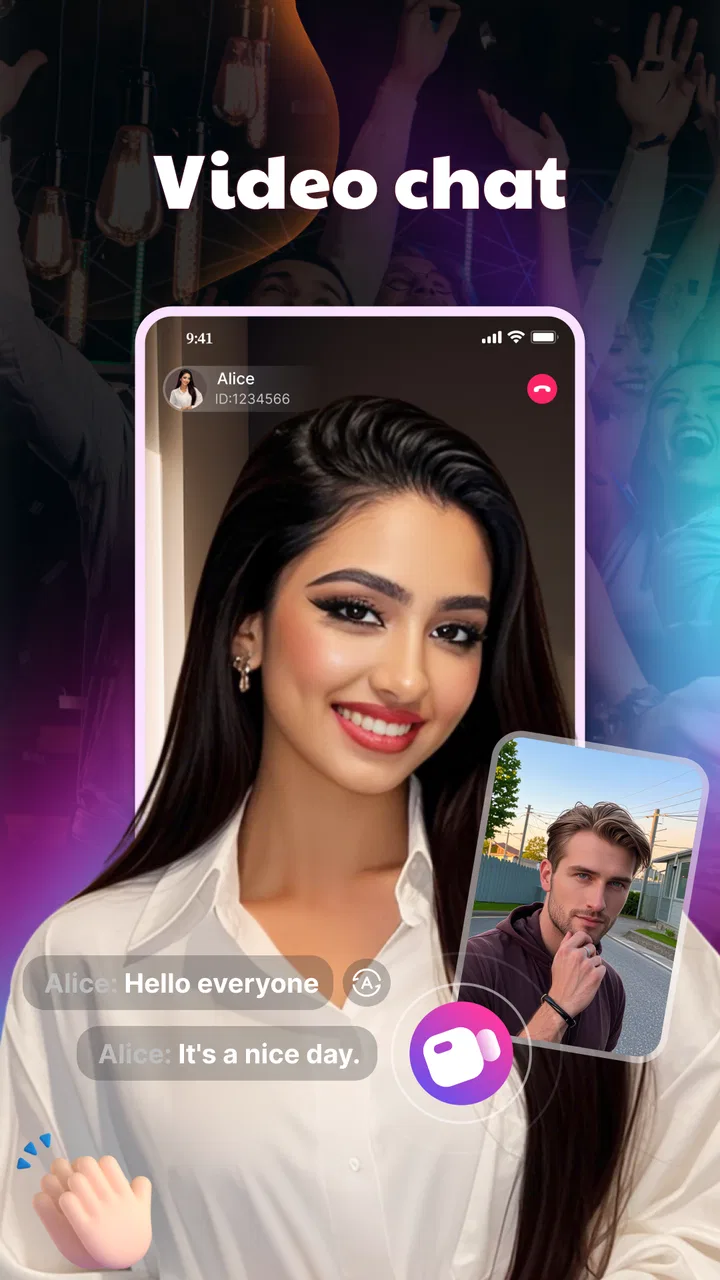
My most reliable workflow starts with a clear reason for opening the app. If I launch it while bored and expect every conversation to be interesting, I quickly become frustrated. If I treat it as a short social break, a way to practice casual conversation, or an opportunity to encounter perspectives outside my usual circle, the format makes more sense. The app is built around online video chat with strangers, so it is naturally immediate rather than deeply structured.
You May Also Like

 Blood Strike: 2.5 Anniversary
Blood Strike’s Loadouts Turn Every Drop Into a Tactical Gamble
A close look at Blood Strike’s custom loadouts: how fast access to signature weapons reshapes its battle royale rhythm, rewards preparation, and narrows the gap between fights.

 Pandora - Music & Podcasts
Pandora’s Music Is Easy to Start, but Harder to Recover
Pandora’s strength is its low-effort path from a seed to a station. Its weak spot is how much confidence it asks you to place in connection, setup, and quiet recovery.

 8 Ball Pool
 Is Built on Rivalries, Rematches, and Routine
A close look at the rivalries, rematches, shared routines, and unanswered safety questions that turn a quick pool match into a persistent mobile community.

 Samsung Music
’s Quiet Strength Is Playing What You Already Own
Its reach comes less from spectacle than from dependable access to a personal library. That simplicity is both the app’s strongest retention engine and its ceiling.

 AccuWeather: Weather Radar
AccuWeather Review: A Quick, Clear Forecast for Everyday Decisions
For everyday plans, the best forecast is the one you can understand quickly. AccuWeather makes rain timing, radar, and local conditions easy to act on, with a few trade-offs.

 Hill Climb Racing
Why Hill Climb Racing Still Turns Crashes Into One More Run
A tiny car, a bumpy hill and one more upgrade: Hill Climb Racing keeps resurfacing because its simple chaos makes every near-miss feel personal.
More From Our News Desk
View All News


I begin by checking that I am comfortable being visible on camera and that my surroundings are suitable. This sounds obvious, but live video makes background details, reflections, documents, family members, and notifications much easier to expose accidentally than ordinary text chat. I keep the camera area uncluttered, remove anything identifiable from view, and avoid using the service in places where another person could appear without agreeing to it.
The first conversation is best treated as a quick screening stage, not a commitment. I pay attention to whether the other person respects a normal greeting, allows the exchange to develop naturally, and reacts appropriately when I set a boundary. A useful habit is to decide in advance what I am willing to discuss. I keep personal contact details, workplace information, precise location, financial details, and private social accounts out of early conversations. That makes it easier to leave without feeling that I have already given away too much.
For an everyday example, imagine having ten quiet minutes after work. I would not open HeyParty while walking home, sitting in a crowded public place, or trying to multitask. I would use it from a private room, set a small time limit, and approach the first interaction as a conversation experiment. If the exchange is awkward, I move on rather than trying to rescue it. If it is pleasant, I can continue while still avoiding the assumption that a friendly stranger is automatically trustworthy.
This short-session approach is one of the strongest ways to make the app feel manageable. It prevents random matching from taking over an evening and keeps the social element light. It also helps reveal whether the service suits me personally. People who enjoy unplanned encounters may find the uncertainty exciting. People who prefer to know a person’s interests, identity, or community before speaking will probably feel more comfortable on interest-based networks, group chats, or conventional messaging apps.
The first settings I would check
Before settling into regular use, I would inspect every visible control related to camera, microphone, notifications, account visibility, and interaction preferences. I would not assume that a default arrangement is ideal simply because the app opens quickly. Live video is more sensitive than text, and a few minutes spent checking the interface can prevent an uncomfortable mistake later.
The camera and microphone deserve particular attention. I keep the microphone muted whenever I am not actively speaking, especially if I am moving around the room or someone nearby might be overheard. I also check the camera preview before joining a conversation. This is not about creating a polished studio setup; it is about avoiding accidental exposure of mail, screens, names, or other people in the background.
Notifications are another practical decision. If I want HeyParty to remain an occasional activity, I prefer alerts that do not interrupt work, sleep, or family time. A social app can become unnecessarily demanding when every prompt feels urgent. Turning down interruptions makes it easier to use the service intentionally instead of responding automatically whenever the phone vibrates.
I also look for the controls that govern leaving a conversation, reporting a problem, or blocking an unwanted contact. I want those actions to be familiar before I need them. In a live environment, hesitation can make a bad interaction feel longer than it needs to be. My rule is simple: if someone becomes aggressive, sexual in an unwelcome way, manipulative, or persistent after I say no, I end the interaction immediately and use the appropriate safety control rather than debating with them.
Because the app carries a Mature 17+ rating, I would not treat it as suitable for children or as a harmless family video tool. That age guidance matters even when a conversation begins politely. Parents looking for a controlled communication space should choose a service designed around known contacts, supervised groups, or family accounts instead. HeyParty’s stranger-chat format is fundamentally different from those options.
Small habits that make random chats better
I get more from the app when I prepare a few neutral conversation starters instead of relying on silence to do the work. Questions about hobbies, films, travel preferences, food, or the reason someone enjoys live chat are broad enough to invite an answer without demanding personal information. I avoid questions that pressure someone to reveal where they live, how old they are beyond what is appropriate to the service, or how to contact them elsewhere.
A second useful habit is to distinguish curiosity from compatibility. A short conversation can be interesting even if I would never want to speak with that person again. That mindset reduces the temptation to keep an uncomfortable exchange alive simply because the first few seconds were engaging. It also makes the app feel less like a search for an ideal match and more like a series of brief social encounters.
I recommend using a consistent exit phrase. Something as simple as “I’m going to stop here; take care” gives me a clean ending without inviting negotiation. If the other person ignores it, I do not repeat myself indefinitely. I leave, block, or report as needed. This repeatable habit is more valuable than trying to develop a perfect conversational technique, because it protects time and boundaries when the interaction stops being enjoyable.
Another practical pattern is to avoid using HeyParty when I am emotionally vulnerable, angry, lonely, or looking for reassurance from strangers. Those moments can make attention feel more meaningful than it really is. The app may provide a pleasant distraction, but it cannot turn an unknown person into a dependable support network. For serious emotional support, a trusted friend or appropriate professional service is a better choice.
Experienced use also means accepting that video quality and conversation quality are separate things. A smooth call does not make the other person reliable, and an awkward beginning does not necessarily mean the individual is unpleasant. I give an interaction a little room when the issue is ordinary shyness, but I do not confuse technical patience with social obligation. The moment a conversation feels unsafe or disrespectful, the correct shortcut is to leave.
Where the free model fits, and where it may not
HeyParty is free to download, which makes trying the basic experience straightforward. The app also includes optional in-app purchases priced from a few dollars to amounts approaching one hundred dollars per item. I would be cautious about spending before understanding exactly which paid elements matter to my own routine. Random video chat can be enjoyable without turning every session into a purchase decision, and paying does not automatically solve the uncertainty that comes with speaking to strangers.
My advice is to use the free experience long enough to answer practical questions: Do I enjoy the pace? Do I find conversations often enough to justify returning? Are the available controls comfortable? Does the social atmosphere suit me? If the answer to those questions is no, buying extras is unlikely to fix the underlying mismatch. Someone who wants dependable discovery may get better value from a platform organized around interests, profiles, or established communities.
The app runs on Android devices using version 6.0 or newer, and the current version is 1.0.36. That broad operating-system requirement makes it accessible to many Android users, including people who are not using the newest phone. Still, live video places practical demands on a device: a weak connection, an older camera, low battery, or a noisy room can make the experience tiring. I would test it on a stable connection before judging the social format itself.
Compared with ordinary messaging apps, HeyParty offers immediacy but sacrifices familiarity and control. Messaging a friend is slower to begin but much easier to trust. Compared with large social networks, it avoids the endless public feed and the pressure of maintaining a visible profile, yet it provides less context before a conversation starts. Compared with group-based video communities, it is more direct and private in the moment, but it may offer fewer shared interests to anchor the discussion.
That trade-off defines the service. It is not the best option for arranging a meeting, maintaining a close friendship, hosting a planned group discussion, or contacting known people. It is more suitable when the appeal lies in the possibility of an unexpected conversation. Users who dislike uncertainty, need strong identity verification, or want detailed moderation controls should consider a more structured alternative instead of trying to force HeyParty into a role it was not designed to fill.
Limits I would keep in mind
The biggest limitation is the stranger factor itself. Even when an app provides tools for leaving or reporting, no live social platform can make every encounter worthwhile. Some people will be shy, distracted, rude, or simply incompatible. I would not measure the app by whether every conversation becomes memorable. A better measure is whether the useful moments justify the interruptions and whether I can exit poor interactions quickly.
Privacy is another ongoing responsibility. I avoid showing identification cards, tickets, work screens, school materials, house numbers, or private conversations. I also do not assume that a person who seems friendly will treat everything shown on camera responsibly. A camera background can reveal more than a user intends, so I keep the frame deliberately plain. This is one of the most important advanced habits because it changes the risk of every conversation without requiring any special feature.
I am also careful about moving a conversation away from the app. A stranger who quickly asks for another account, a phone number, money, intimate images, or a private meeting is giving me useful information about their intentions. I do not reward pressure with access. If I choose to continue contact elsewhere, I would first establish a longer pattern of respectful behavior and use an account that does not expose my main identity, but in many cases the safest decision is simply not to continue.
There is a social-energy cost as well. Rapid conversations can feel exciting for a while, then strangely repetitive. I would use a session limit and stop when I notice that I am mechanically accepting interactions without interest. This is a subtle but important trade-off: the app’s convenience makes it easy to keep going, while the quality of attention may already have dropped. A shorter, intentional session usually feels better than an extended search for a perfect exchange.
Finally, I would not use the service as evidence that a stranger is who they claim to be. Video can create a strong impression of authenticity, but it does not establish trust, background, or good intentions. I keep plans involving travel, money, personal meetings, and sensitive information completely separate from the brief connection created inside a live chat.
My verdict after using it as intended
HeyParty is most convincing when I treat it as a controlled window into spontaneous conversation, not as a complete social life. The straightforward video-first format can be refreshing, especially for someone who enjoys meeting unfamiliar people and does not need every interaction to lead somewhere. Its free entry point lowers the barrier to trying it, while the current Android compatibility makes it available to a broad range of devices.
I would recommend it to adults who understand the privacy trade-offs, are comfortable ending conversations quickly, and enjoy social unpredictability. I would not recommend it to minors, people seeking a supervised family environment, or anyone who needs reliable identity and purpose before starting a conversation. It is also a poor fit for users who find random encounters stressful rather than energizing.
My final routine would be simple: use a private setting, check the camera and microphone, keep personal information out of early chats, set a time boundary, and leave at the first clear sign of disrespect. I would try the free version before considering any purchase, and I would compare the experience with interest-based communities or known-contact messaging if I wanted more control. Used with those limits, HeyParty offers a genuine social experiment. Its value comes from the occasional good conversation, while its weaknesses make judgment and personal boundaries just as important as the app itself.
FAQs for HeyParty - Chat room & Live
01What is HeyParty – Chat room & Live, and what can users do in the app?
HeyParty – Chat room & Live is a social entertainment app focused on real-time interaction. After creating a profile, users can enter live chat rooms, listen to conversations, send messages, meet new people, and participate in interactive social activities. The experience is designed around casual communication and live community engagement rather than traditional one-to-one messaging, so the available rooms and atmosphere may vary depending on the time of day and active users.
02Is HeyParty – Chat room & Live free to download and use?
The app can generally be downloaded at no initial cost, but some features may depend on in-app purchases, virtual items, subscriptions, or other paid options. Free users should check the current pricing information shown in the app before spending money. Availability of premium functions can change with updates, and purchases may be processed through Google Play or the App Store, so users should also review their platform’s refund and billing policies.
03Does HeyParty require an account, microphone, or other permissions?
HeyParty may require users to register or sign in before accessing its social features, particularly live rooms and messaging tools. Depending on how you use the app, it may request access to the microphone, notifications, camera, photos, or other device functions. You do not necessarily need to grant every permission immediately. It is sensible to allow only the access required for the features you intend to use and review permissions later in your device settings.
04Is HeyParty safe for teenagers and suitable for all ages?
Because HeyParty includes live conversations and interaction with people you may not know, the content and behavior in rooms can vary. Users should avoid sharing their real address, passwords, financial information, private photographs, or other sensitive details. Parents should check the app’s official age rating, privacy policy, and parental-control options before allowing a minor to use it. Report, mute, and blocking tools should be used whenever a conversation becomes inappropriate or uncomfortable.
05What should I do if I experience harassment, inappropriate content, or technical problems?
If you encounter offensive behavior, suspicious accounts, unwanted messages, or inappropriate live content, use the app’s available report, block, or mute functions and leave the room if necessary. For login failures, crashes, missing purchases, or connection problems, first update the app, restart your device, and check your internet connection. If the issue continues, contact HeyParty support through the in-app help area or the official store listing, including relevant details without exposing private information.
Pros
- Easy-to-use interface for joining live chat rooms
- Supports real-time interaction with multiple participants
- Discoverable rooms make finding new conversations simple
- Live format creates a more social
- spontaneous experience
- Useful for meeting people with similar interests online
Cons
- Room quality can vary depending on the host and participants
- Public chats may expose users to unwanted messages
- Some features may require in-app purchases or paid access
- Busy rooms can feel noisy and difficult to follow
- Requires a stable internet connection for smooth live sessions

HeyParty - Chat room & Live
Gallery